Evidence-Based Practice in Action
Left Side Strong LLC translates reading science and evidence-based practice into strategies that are realistic, feasible, and sustainable — grounded in the lived experience of teachers and students. Teachers are the change-makers: they deserve to learn from research, and to share what they know so research can learn from them.
Who We Serve
Evidence-based literacy and language support, tailored to where you sit in a child's learning.
Implementation support that helps evidence-based practice actually stick — from PD to MTSS.
Personalized, evidence-based learning that translates research into classroom-ready strategies.
Understand your child's learning profile and get support grounded in real research.
PD & Courses
Self-paced courses and professional development grounded in the science of reading and language. Every course is organized around the language domains — phonology, morphology, syntax, semantics and vocabulary, and discourse — not decoding alone. Pricing is tailored to your needs; request a quote and we’ll set you up with access.

A teacher-friendly path through structured literacy with an emphasis on language — phonology, sound–symbol, morphology, syntax, semantics and vocabulary, and discourse — so students say it, read it, spell it, and use it to make meaning.
Request access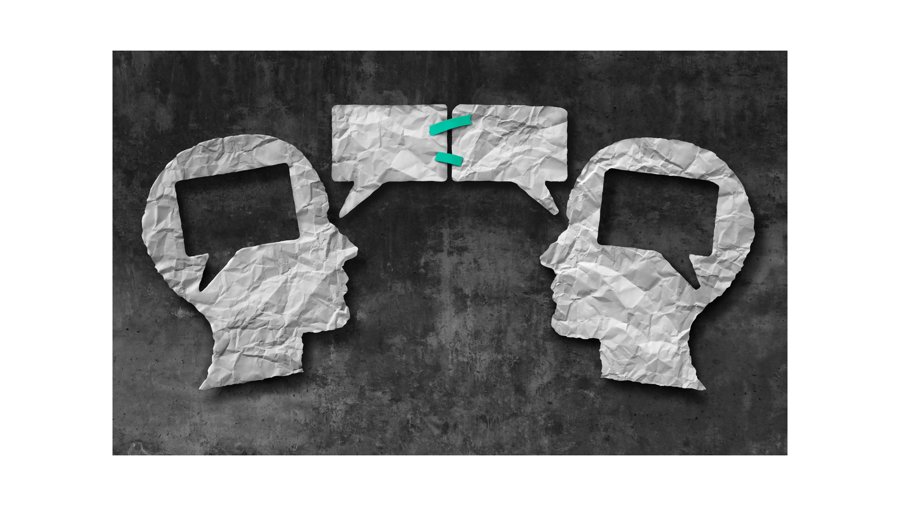
A live, interactive workshop connecting oral language development to reading comprehension outcomes. Great for grade-level teams.
Request a quote
Vocabulary and background knowledge are the engine of comprehension. This course turns the science of word learning and knowledge-building into daily classroom routines — grounded in a full research base.
Explore the course
The connection every educator should know. Understand two language-based neurodevelopmental conditions, how they overlap in real classrooms, and how to screen for and support every learner.
Explore the courseContinuing education & standards: Left Side Strong’s application to become an ASHA Continuing Education (CE) Provider is in progress — ASHA CE credit is not yet available. Courses are designed to align with the International Dyslexia Association (IDA) Knowledge and Practice Standards for the teaching of reading.
District and school engagements are billed by formal invoice — paid securely by card or bank transfer through PayPal, with terms that fit your purchasing process. Tell us what you need and we'll send a proposal and invoice.
Inside the Courses
Each module includes a teaching deck, a participant workbook, and a knowledge-check quiz. Open a course to see its modules.
A self-paced path through the whole language system — carrying each target pattern across the language domains (phonology, sound–symbol, morphology, syntax, semantics and vocabulary, and discourse) so students say it, read it, spell it, and use it to make meaning. Each module includes a teaching deck, a participant workbook, and a knowledge-check quiz.
The reading brain, the Simple View, and what “structured” really means.
Phonological & phonemic awareness — the sounds under every word.
Phonics, decoding & spelling through a structured lesson format.
Morphology & vocabulary — how word structure powers reading.
Syntax & written expression that connect reading to writing.
Oral language & comprehension — the language-comprehension side.
Assessment, MTSS, and a realistic plan to put it all together.
Once words are decoded, comprehension still depends on meaning — vocabulary, background knowledge, and the language that connects ideas. This self-paced course turns the science of word learning and knowledge-building into daily routines. Every module is grounded in the research base and includes a teaching deck, a participant workbook, and a knowledge-check quiz.
Why vocabulary and background knowledge are the engine of comprehension — and the situation model behind meaning.
How vocabulary develops, the “Matthew effect,” and the quantity and quality of language input.
Selecting high-value words by tiers — and by how children actually learn them.
Explicit, extended word teaching and routines that transfer.
Knowledge networks, semantic categories, and content-rich literacy that boosts comprehension.
How sentence structure, word parts, and connecting language carry meaning across text.
A realistic plan to embed word and world knowledge across tiers and for English learners.
A connection every educator should know. Dyslexia and Developmental Language Disorder (DLD) are language-based neurodevelopmental conditions that often overlap — yet DLD is widely under-identified. This self-paced course helps you understand both, recognize them in the classroom, and screen for and support every learner. Each module includes a teaching deck, a participant workbook, and a knowledge-check quiz.
How language drives learning and comprehension — the language domains and the Simple View of Reading (code and meaning).
Definition, causes, prevalence, and risk & protective factors — dyslexia as difficulty with the word form of language.
What Developmental Language Disorder is, how common it is (about 1 in 14), why it’s so often missed, and its lasting impact.
How DLD and dyslexia overlap, why comorbidity is the rule, the four reader profiles, and myths vs. facts.
Observable behaviors from PreK–2 and beyond — what dyslexia and DLD actually look like in real classrooms.
Measuring risk across word recognition and language comprehension; moving from “wait to fail” to early identification, and who does what.
Four oral-language comprehension strategies and five evidence-based practices you can use tomorrow.
Try Before You Enroll
Every course pairs teaching decks with participant workbooks and knowledge-check quizzes. Download a sample workbook and try a quick 5-question quiz from each course — no sign-up needed.
A printable participant workbook from Module 1 — the same format used across all seven modules, with guided notes and reflection prompts.
Download the workbook (PDF)Five quick questions from Module 1. Choose your answers, then check your score instantly — no sign-up needed.
A printable participant workbook from Module 4 — word-selection sort, a five-step planning template, and a semantic-network builder.
Download the workbook (PDF)Five quick questions on robust vocabulary instruction. Choose your answers, then check your score instantly.

About the Founder
Mom. Wife. Educator. Researcher. Reading & Language Specialist. MaryKate founded Left Side Strong LLC in 2023 after more than a decade in education — beginning as a high school English teacher, her teaching trajectory was driven by the reality of students reaching graduation still unable to read. She transitioned to working with preK–8th students, determined to impact the trajectories of students with reading risk.
Her work spans the classroom, the clinic, and the research lab. Through Left Side Strong, MaryKate aims to bridge research and practice — and practice to research — by focusing on language and literacy development across reading, writing, speaking, and listening, and partners with schools, districts, and families to support the implementation of evidence-based instruction.
MaryKate is a Ph.D. Fellow and doctoral student in Educational Psychology at the University of Connecticut (UConn). Her research focuses on oral language comprehension, vocabulary, the early identification of students at risk for reading difficulties, and the implementation of MTSS — work that keeps Left Side Strong grounded in the newest science.
"Committed to ensuring every child's basic right to literacy as a means to reach their human potential — through preventative practice, evidence-based instruction, and collaborative research-practice partnerships guided by evolving science."
Get in Touch
Tell me a little about you and what you’re looking for — a free consult, PD and courses, or a district proposal. I’ll get back to you personally.
Every message comes straight to my inbox. I read them all and reply as soon as I can.
📍 Medfield, MA